
 By
By 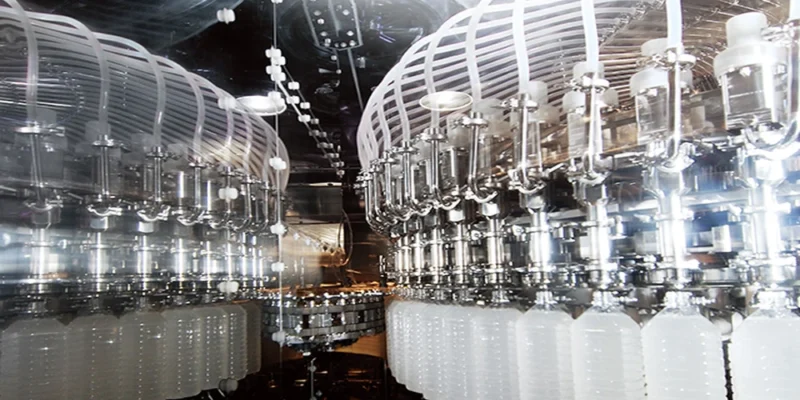
Liquid filling equipment in Singapore serves the manufacturing sector across a wide range of industries, from food and beverage producers to chemical manufacturers, pharmaceutical producers, and industrial lubricant suppliers. The common requirement across all of these applications is reliable, accurate filling of liquid products into containers at production rates that support the commercial operation. The specific equipment required varies considerably by product type, container format, accuracy requirement, and throughput target.
The Role of Liquid Filling Equipment in Production
Liquid filling is typically a critical-path operation in liquid product manufacturing. Delays or failures at the filling station affect the entire production line downstream. This makes equipment reliability the primary performance criterion from an operational perspective: a filling machine that achieves excellent fill accuracy when running but experiences frequent mechanical downtime is a production constraint that undermines the line’s overall efficiency.
Liquid filling equipment in Singapore for reliable production operations must therefore combine fill accuracy with mechanical robustness, ease of maintenance, and the availability of local technical support when service is required. An overseas supplier with poor local service capability represents a significant operational risk for a Singapore manufacturer whose production schedule depends on filling equipment uptime.
Equipment Types by Application
The diversity of liquid products manufactured in Singapore means that liquid filling equipment spans several distinct equipment categories.
Thin liquid filling for water, beverages, sauces, and other free-flowing liquids uses gravity, overflow, or rotary piston filling mechanisms that handle the low viscosity of these products efficiently. Throughput rates for thin liquid filling in beverage applications can reach several hundred units per minute on high-speed multi-head systems.
Medium viscosity filling for products like cooking oils, body lotions, shampoos, and cleaning agents requires positive displacement pumps that provide consistent product transfer without the flow irregularities that gravity feeding would produce.
High viscosity filling for products like pastes, gels, adhesives, and thick sauces requires specialised pump and nozzle designs that can handle materials with significant resistance to flow while maintaining fill accuracy and minimising mess at the nozzle.
Hot fill applications for products that are filled at elevated temperatures require filling equipment with materials and sealing components rated for the relevant temperature range, and in some cases with insulation to protect operators and surrounding equipment.
Accuracy and Compliance
Fill accuracy requirements in Singapore liquid filling operations are driven by Singapore Food Agency regulations for food products, and by Singapore Standards for trade measurement compliance for all packaged products. The Weights and Measures Act requires that net content declarations on packaged goods are accurate within defined tolerances.
As Singapore’s National Metrology Centre notes in its guidance for manufacturers, “Accurate and traceable measurement is fundamental to product integrity, regulatory compliance, and commercial fairness in packaged goods markets.”
Liquid filling equipment that meets these requirements uses calibrated measurement systems, whether volumetric or gravimetric, with appropriate uncertainty ranges for the product being filled and the container size being used.
Maintenance and Service Considerations
The operational cost of liquid filling equipment over its service life is heavily influenced by the maintenance requirements and service access associated with the specific equipment. Equipment with:
- Accessible wear components that operators can replace without specialist tools
- Clear maintenance schedules with defined service intervals
- Available spare parts from local stock or with fast international shipping
- Local technical service capability for complex faults
…delivers lower total cost of ownership than equipment that is technically superior but operationally demanding to maintain.
Production Integration
Modern liquid filling equipment for Singapore production lines is designed to integrate with upstream and downstream production systems through standard industrial communication protocols. SCADA systems, production management platforms, and quality control systems can typically be connected to filling machine control systems to enable real-time production monitoring, yield tracking, and fault alerting.
This integration supports the smart factory and Industry 4.0 objectives that Singapore’s manufacturing sector is actively pursuing, with the filling machine contributing production data to a broader digital operational picture.
Finding the Right Equipment
The selection of reliable liquid filling equipment for Singapore manufacturing operations requires detailed specification against the actual product characteristics, container range, throughput requirement, and accuracy standard applicable to the specific operation. Working with a supplier who has direct experience with comparable applications and who can provide Singapore-based technical support after installation is the most reliable path to equipment that performs as required from day one and continues to do so throughout its service life.









Comments